

Families Achieving Self-Sufficiency Together
Supporting disconnected adults and youth with disabilities in achieving financial self-sufficiency

About the Program
Families Achieving Self-Sufficiency Together (FASST), supported by the Disability Innovation Fund, helps people with disabilities build job skills, find employment, maintain employment and become more financially independent.
The program serves adults with disabilities from low-income households and youth ages 14–24 with disabilities who face challenges finding or keeping a job. This includes youth who are from low-income households, have unstable housing, are in foster care, or are involved in the justice system.
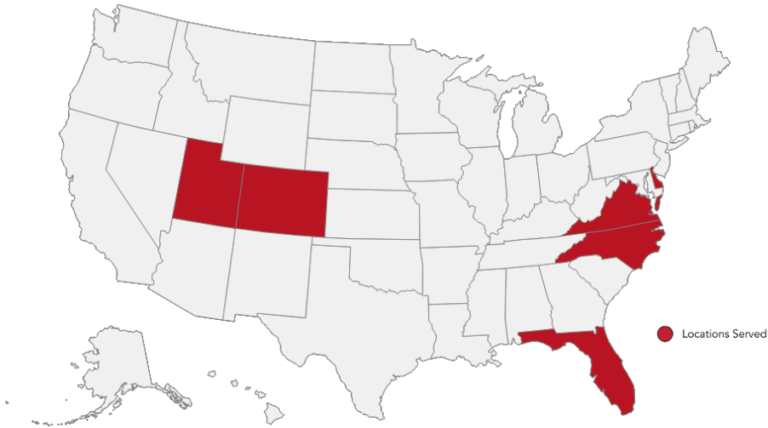
FASST operates in multiple locations within Colorado, Delaware, Florida, North Carolina, Utah, and Virginia. The program works with Vocational Rehabilitation (VR), schools, community organizations, workforce agencies, and employers to help participants access services and employment opportunities.
Participants may receive services such as:
- Career planning
- Job readiness training
- Job search assistance
- Help connecting with community resources
- Ongoing support to address barriers to employment
- Case management
Through these services, FASST helps participants build skills, find and keep employment, and work toward greater financial independence.
Eligibility
Adults must meet the following eligibility criteria:
- Have a disability that makes it hard to work without our help
- Must have at least one dependent child in the household (under age 18, or under age 19 if enrolled in secondary education)
- Household income must meet low-income requirements
- Must be eligible to work in the United States
- Must be available to receive services in our service areas.
- Additionally, youth (age 14-24) with a disability may qualify if they are in a low-income household or meet one or more of the following criteria:
- Meet low-income requirements themselves, have unstable housing, are in foster case, or are involved in the justice system
FASST Referral Form
Areas We Serve
FASST supports disconnected adults and youth with disabilities across multiple states, including:
- Colorado: Denver-Metro Area, Adams, Arapahoe, Broomfield, Boulder, Denver, Douglas, & Jefferson Counties
- Florida: Hillsborough, Pinellas, Duval, Orange, Lake, and Osceola counties
- Northern Virginia: Arlington, Fairfax, Loudoun, Prince William, Spotsylvania, or Stafford counties, and the cities of Alexandria and Fredericksburg
- North Carolina: Cumberland, Hoke, Lee, Moore, Harnett, Robeson, and Bladen counties
- Utah: Davis, Box Elder, Weber, and Salt Lake counties
- State of Delaware
News and Updates
Previous News
FASST Featured at United Way Speaker Series on Community Needs
FASST Featured on the VRTAC Manager Minute Podcast
National Clearinghouse of Rehabilitation Training Materials Promotes FASST on New Resource Hub
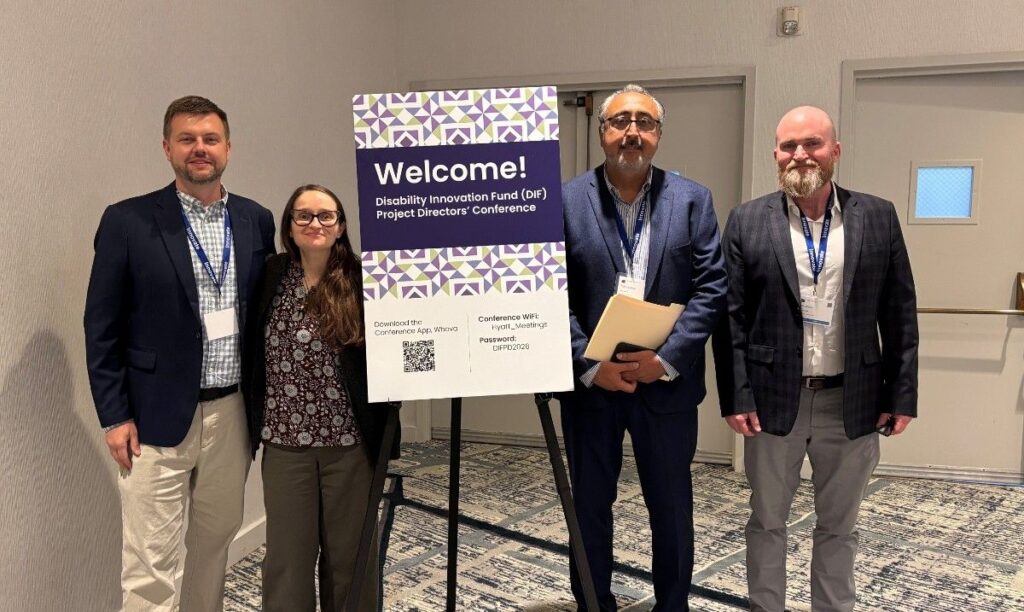
FASST Leadership Presents at Disability Innovation Fund Project Directors Conference
ServiceSource Launches Families Achieving Self-Sufficiency Together (FASST) program
FASST Leadership Team
Lucas Halverson
Kathy Davis
Resources, Materials, and Partnerships
Resources
Materials
- FASST General Flyers
- FASST Youth Program Flyers
- FASST Referral and Inquiry Form
- Preparing to Apply for Vocational Rehabilitation
Partnerships
Our Ability focuses on providing employment solutions for people with disabilities. Our Ability provides AI job matching, business engagement, technical assistance and training support to the FASST project. Learn more about Our Ability at www.ourability.com.

River Rock Creative collaborates with ServiceSource Communications to support webpage design and maintenance for our FASST webpage. Learn more about River Rock Creative + Interactive at https://riverrock.agency/.
The Rehabilitation Services Administration (RSA) administers the Disability Innovation Fund (DIF), a discretionary grant program of the U.S. Department of Education that supports innovative activities to improve education, career development, and Competitive Integrated Employment (CIE) outcomes for youth and adults with disabilities. Learn more about RSA at https://rsa.ed.gov/.

Grantibly serves as the external evaluator for the FASST project. Specializing in evaluation of education and workforce development initiatives, Grantibly helps projects like FASST use data strategically to strengthen programs, improve participant outcomes, and communicate impact to stakeholders and funders. Learn more about Grantibly at www.grantibly.com.
Disclaimer: The contents of this webpage were developed under grant H421F240144 from the U.S. Department of Education (Department). The Department does not mandate or prescribe practices, models, or other activities described or discussed in this document. The contents of this webpage may contain examples of, adaptations of, and links to resources created and maintained by another public or private organization. The Department does not control or guarantee the accuracy, relevance, timeliness, or completeness of this outside information. The content of this webpage does not necessarily represent the policy of the Department. This publication is not intended to represent the views or policy of or be an endorsement of any views expressed or materials provided by any Federal agency. (EDGAR 75.620)